How to Install an EV Charging Station Safely

Time:2026-09-26 Author:Amelia
0%

An EV charger may look like a compact box on a garage wall. Behind it, however, are a dedicated circuit, wiring sized for the load, and connections that must stay secure through years of use. Learning how to install a charging station safely starts with checking the home’s electrical capacity—not choosing a charger by appearance or price. A panel label, a tripping breaker, or a warm outlet can each signal that the setup needs closer attention. Small clues matter.

Electrical instructor Mike Holt is a respected voice in electrical education. A practical paraphrase of his safety-first teaching is: “Verify the circuit before selecting the equipment.” That is a guiding principle here, not a verbatim quotation. A qualified electrician can assess the panel, confirm the required circuit, and determine whether the proposed location protects the equipment from impact and moisture. The right details depend on the home. There is no useful shortcut around them.

This guide explains the decisions that make an installation safer, from charger placement and circuit planning to final inspection and testing. It also distinguishes simple preparation from electrical work best left to a professional. A neat cable run is not proof of a safe installation. Neither is a charger that powers on once. I would pause over any plan that skips load calculations or treats the manufacturer’s instructions as optional. Safety is practical, specific, and sometimes less tidy than expected.
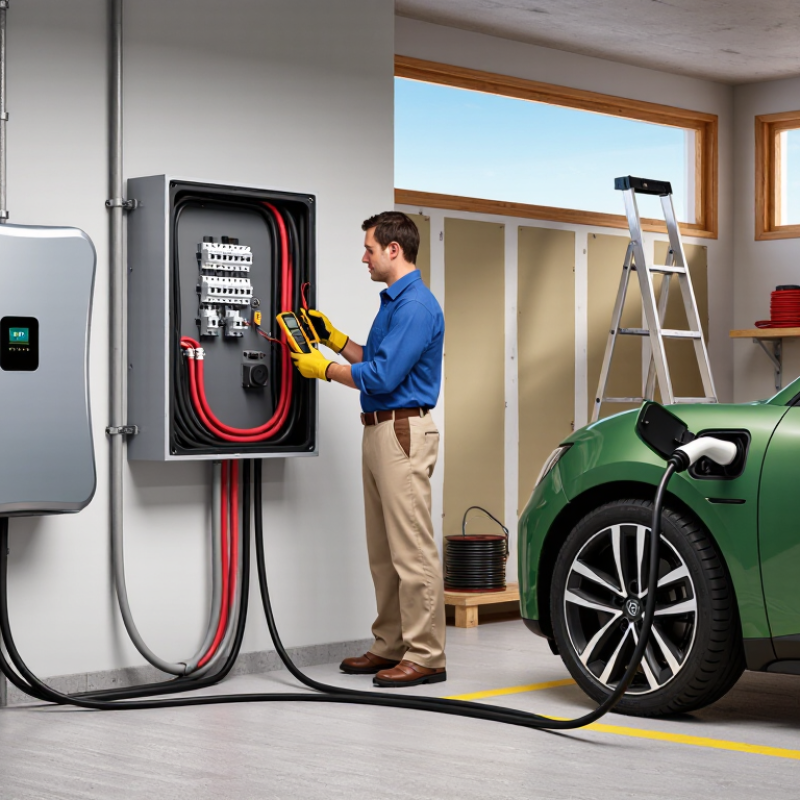
How to Install an EV Charging Station Safely

Assess Panel Capacity, 240 V Supply, and Local Permit Requirements

Installing safely starts with the electrical panel, not the charger location. A 240 V circuit can draw substantial current for hours. Ask a licensed electrician to assess the panel rating, existing loads, available breaker space, and service capacity. An empty slot does not confirm spare capacity. A load calculation may reveal the need for a service upgrade or a suitable load-management device. Keep the panel closed; parts inside can remain dangerous even when breakers are off.

Tips: Before choosing a charging location, note the distance from the panel, cable route, and any walls or doors the cable must cross. Share these details with your electrician. Small details matter. Avoid extension cords unless the equipment instructions specifically allow them.

Permit rules vary by location and installation type. Contact your local building department before work begins, and ask whether an electrical permit, inspection, or utility notification is required. Keep the approved plans and inspection record with your home documents. Requirements can be easy to overlook, so verify them directly rather than relying on a neighbor’s recent project.

240 V EV Charging: Power by Charging Current

At nominal 240 V, charging power is calculated as voltage × current. EV charging is generally treated as a continuous load; a 125% sizing example is shown for circuit capacity.

Example circuit ratings: 16 A charging requires a 20 A circuit; 24 A, 30 A; 32 A, 40 A; 40 A, 50 A; and 48 A, 60 A. Before installation, verify panel capacity, wiring and equipment requirements, and local permit rules with a qualified electrician and your local building authority. Requirements vary by location.

Choose a Listed Level 2 EVSE Matched to Vehicle and Site Needs

A Level 2 electric vehicle supply equipment unit, or EVSE, should be listed by a recognized testing laboratory. That listing indicates the unit was evaluated against relevant safety standards, but it does not guarantee a good fit for every home. Check the vehicle’s maximum AC charging rate and the EVSE’s output. A higher-rated unit may not charge that vehicle any faster. More is not always better.

Then match the unit to the site. Have a qualified electrician assess the panel’s available capacity, circuit requirements, wiring route, and local electrical rules before purchase. A garage outlet may look convenient, yet the panel could need an upgrade. That matters. Measure the distance from the planned mount to the parked vehicle’s charge port, allowing enough cable slack without crossing a walkway. For an outdoor location, confirm the EVSE is rated for its exposure to rain, dust, and temperature changes. Small details count.

I would resist choosing by charging speed alone; that shortcut can overlook installation cost and daily convenience. Even a careful plan can miss something, such as a second vehicle needing access later. Ask the electrician to verify the exact EVSE model, circuit rating, mounting surface, and cable reach together. A listed unit is a sound starting point, not the whole safety plan.

Size the Branch Circuit at 125% of the EVSE’s Continuous Current

How to Install an EV Charging Station Safely

An EV charging station draws power for hours, so its load is treated as continuous. Size the branch circuit for at least 125% of the EVSE’s maximum continuous current. For example, a 32-amp EVSE generally needs a 40-amp branch circuit; a 48-amp unit needs 60 amps. Check the equipment instructions and applicable electrical requirements before choosing a breaker or conductors. The arithmetic is simple. The installation details are not.

Tips: Confirm the EVSE’s current setting, circuit rating, and conductor ampacity together. A cable’s suitability can change with installation conditions, including temperature and conduit fill. Keep the connection point accessible, and label the circuit clearly. Don’t rely on a familiar wire size alone.

Have a qualified electrician verify the panel capacity, grounding, and protective devices. If the service cannot support the planned load, pause and reassess rather than reducing safety margins. A small oversight—like setting the EVSE above the circuit’s capacity—can create a serious hazard. It is easy to miss. Check the final setup against the equipment instructions and local requirements before charging.

Install NEC Article 625 Personnel Protection and Outdoor-Rated Equipment

How to Install an EV Charging Station Safely

The IEA’s Global EV Outlook 2024 projected more than 17 million electric-car sales in 2024, over one-fifth of worldwide sales. As charging expands, safe installation matters at homes and workplaces. NEC Article 625 requires EV charging equipment to include a listed personnel-protection system. This protection helps reduce electric-shock risk if a fault occurs. Use equipment approved for the intended installation, and have a qualified electrician verify the circuit, grounding, and protective functions. Small details matter.

Outdoor installations need equipment rated for the actual conditions, including rain, dust, temperature changes, and possible impact. A weather-resistant enclosure is not a substitute for correct installation: place connectors where they will not sit in puddles or be crushed by vehicle tires. Check that cable routing avoids sharp edges and trip paths. One detail is easy to overlook: a covered parking area can still expose equipment to wind-driven rain. Confirm the applicable NEC edition and local requirements, since adopted rules can vary. Before use, have the installer test the protection system and document the equipment rating and inspection results. A neat installation is not always a safe one. I would still recheck the seal after maintenance or a hard winter.

How to Install an EV Charging Station Safely - Install NEC Article 625 Personnel Protection and Outdoor-Rated Equipment
Installation Dimension Safety Data or Requirement Practical Check
Applicable electrical code Follow the NEC edition adopted by the local jurisdiction, applicable local amendments, and the authority having jurisdiction (AHJ). Confirm permit, inspection, and equipment requirements with the local building or electrical department before work begins.
EVSE listing and installation Use charging equipment listed for its intended use and install it according to its listing and manufacturer instructions, consistent with NEC Article 625. Check the equipment label for supply voltage, maximum current, permitted location, and installation instructions.
Personnel protection NEC 625.22 requires an approved personnel-protection system for EV charging equipment. The required protection may be provided as part of listed equipment. Verify the EVSE’s protection features and follow applicable code requirements for any receptacle or upstream circuit protection.
Continuous-load circuit sizing EV charging is treated as a continuous load. Branch-circuit conductors and overcurrent protection are generally sized for at least 125% of the charging load, subject to the adopted code and equipment instructions. Have a qualified electrician verify conductor ampacity, breaker rating, terminal temperature limits, and any required adjustments.
Illustrative current examples 32 A charging load → at least 40 A circuit capacity; 40 A → at least 50 A; 48 A → at least 60 A, based on the 125% calculation. These are sizing examples, not wire-size specifications. Actual conductor selection depends on installation conditions and applicable code rules.
Panel and service capacity The electrical system must have sufficient capacity for the EV charging load. A load calculation may be required before adding a new circuit. Ask the electrician to assess the service, panel, existing loads, and any approved load-management system.
Outdoor equipment Equipment installed outdoors must be listed and suitable for the environmental conditions and wet locations. Enclosures and fittings must be appropriate for the location. Check the product documentation for outdoor suitability; protect wiring connections and follow the manufacturer’s weather-exposure instructions.
Wiring and grounding Use wiring methods and materials permitted for the location, and provide the required equipment grounding and bonding. Ensure conductors, conduit, fittings, and terminations are selected and installed for the actual indoor or outdoor conditions.
Mounting and cable routing Mount the charging equipment securely and route the cable to reduce trip, crushing, abrasion, and vehicle-impact hazards. Keep the connector and cable accessible without blocking walkways, doors, or required access to electrical equipment.
Inspection and operation Complete required inspection and commissioning before use. Stop using equipment with damaged cables, loose connections, or signs of overheating. Test and maintain the EVSE as directed by its manufacturer, and report faults to a qualified service professional.
Important: This checklist is general information, not a substitute for the locally adopted electrical code, product instructions, permit review, or evaluation by a qualified electrician. Requirements can vary by installation and jurisdiction.

Test Grounding, Voltage, and Charging Operation Before Handover

How to Install an EV Charging Station Safely

Before handover, verify the circuit against the equipment nameplate and installation design. The U.S. Department of Energy’s Alternative Fuels Data Center lists Level 2 charging as 208 or 240 volts AC. That figure is a reference, not a pass result: measure voltage at the charger terminals and confirm it remains within the manufacturer’s specified range. Check protective-earth continuity with an appropriate tester, and inspect terminations for secure connections, correct conductor size, and signs of heat damage. Small details matter. Record the readings, instrument used, and test conditions.

Then test the complete charging sequence with a compatible vehicle or approved test equipment. Confirm the unit starts, maintains charging, and stops correctly; check indicators and any fault response. The U.S. Department of Energy also describes Level 2 equipment as delivering roughly 3–19 kW, so observed operation should make sense for the unit’s rating and supply. Do not treat a lit status light as proof of safe grounding. A missed connection can look tidy. Follow applicable electrical requirements and the manufacturer’s commissioning procedure, and have a qualified electrician resolve unexplained readings before handover. Leave the customer with the test record and a clear explanation of normal status signals.

FAQS

What should I check before choosing a charging location?

Ask a qualified electrician to assess panel capacity, existing loads, breaker space, and service capacity. Note the cable route and distance from the panel. Small details matter.

Does an empty breaker slot mean my panel can support a charger?

No. An empty slot does not confirm spare capacity. A load calculation may show that an upgrade or load-management device is needed.

How large should the branch circuit be?

Size it for at least 125% of the charger’s maximum continuous current. A 32-amp charger generally needs a 40-amp circuit. Check the equipment instructions.

Can I choose a breaker based only on the charger’s current setting?

No. Confirm the current setting, circuit rating, and conductor ampacity together. Installation conditions can affect cable suitability. It’s easy to miss.

Should I use an extension cord to reach the parking spot?

Avoid extension cords unless the equipment instructions specifically allow them. Plan a suitable cable route with your electrician instead.

What safety protection should charging equipment include?

It should have a listed personnel-protection system. Have a qualified electrician verify grounding, protective functions, and the completed installation before charging.

What should I consider for an outdoor charger?

Choose equipment rated for rain, dust, temperature changes, and possible impact. Keep connectors away from puddles and vehicle tires. A roof may not block wind-driven rain.

Are permits or inspections needed?

Requirements vary by location and installation type. Ask the local building department about permits, inspections, and utility notifications before work begins.

What should I keep after installation?

Keep approved plans, inspection records, equipment ratings, and test results with your home documents. I would recheck the seal after maintenance or a hard winter.

Conclusion

Installing a Level 2 EV charging station safely begins with checking whether the electrical panel has enough capacity and whether a suitable 240 V supply is available. Confirm local permit and inspection requirements before work starts. Choose listed charging equipment that matches the vehicle’s charging needs and the installation site, including any exposure to weather. The branch circuit should be sized at 125% of the charging equipment’s continuous current, with the wiring and protective devices selected to suit the installation.

A qualified electrician should follow applicable electrical requirements, including NEC Article 625 personnel-protection provisions, and use outdoor-rated equipment where needed. Before handover, verify grounding and voltage, inspect connections, and test charging operation. These steps provide a practical foundation for understanding how to install a charging station safely while helping ensure the system is suitable for regular use.

Amelia

Amelia

Amelia is a seasoned marketing professional with a wealth of expertise in our company’s core offerings. With an unwavering passion for driving growth and innovation, she plays a pivotal role in shaping our marketing strategies and enhancing brand visibility. A key aspect of her responsibilities......