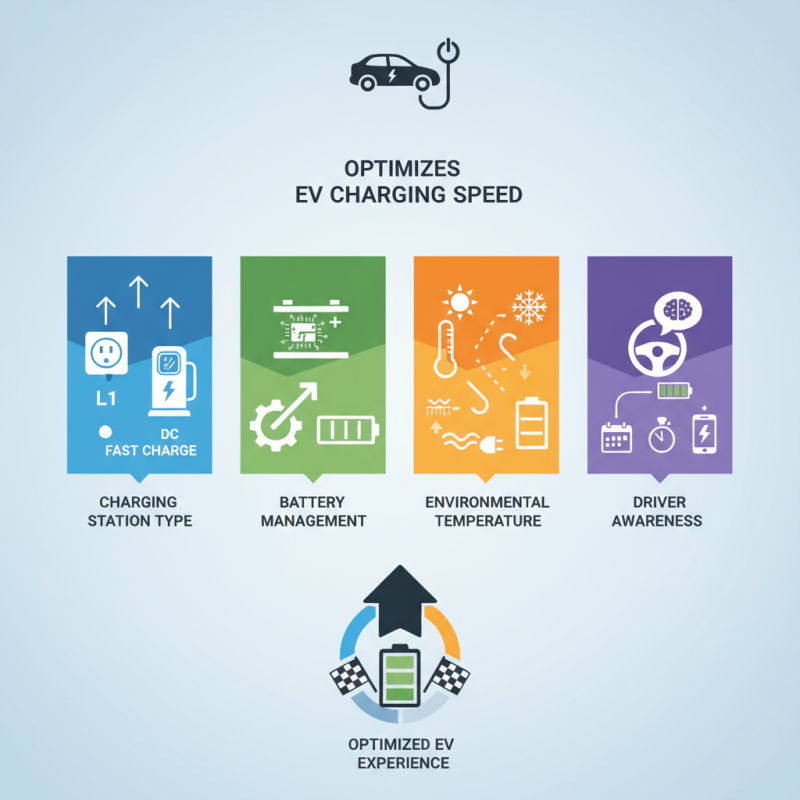
In an era where electric vehicles are taking over the roads, the question arises: how to optimize charging speed for electric vehicles? Fast charging is essential for EV owners, especially during long trips or busy days. However, many drivers are unaware that various factors play a role in charging efficiency.
One crucial aspect is the charging station type. Level 1, Level 2, and DC fast chargers offer different speeds. Understanding these differences can significantly impact charging times. Moreover, battery management systems play a vital role in ensuring optimal charging speed. A well-maintained battery can handle higher power inputs safely.
Another key point is the environmental temperature. Extreme heat or cold can slow down the charging process. Therefore, drivers should be mindful of their surroundings when charging. Ultimately, knowing how to optimize charging speed for electric vehicles can enhance the EV experience. Small changes can lead to significant improvements in efficiency and convenience.
Understanding Electric Vehicle Charging Basics
Understanding the fundamentals of electric vehicle (EV) charging is essential for optimizing charging speed. EVs primarily use three types of charging: Level 1, Level 2, and DC fast charging. Level 1 offers the slowest charge, usually through a standard 120-volt outlet, taking up to 20 hours to fully charge a vehicle. Level 2 charging provides a 240-volt option, cutting this time down to approximately 4 to 8 hours, depending on battery size. DC fast charging is the fastest, enabling an 80% charge in as little as 30 minutes. According to the U.S. Department of Energy, these differing charging levels can significantly impact convenience and usability, especially for urban drivers.
Tips: To maximize charging speed, opt for DC chargers when possible. Seek out charging stations with higher kilowatt (kW) ratings. Many stations now offer up to 350 kW. However, your vehicle’s battery management system will determine the maximum rate at which it can accept charge.
Additionally, monitoring battery temperature can affect charging speed. Cold batteries can charge slower, while overheating can lead to reduced performance. It’s essential to maintain your battery within optimal temperature ranges. This means balancing speed and battery health is a crucial consideration for both short- and long-term use.
Types of Charging Solutions for Electric Vehicles
Electric vehicle (EV) charging solutions vary widely. Understanding these options helps optimize charging speed and convenience. There are three main types: Level 1, Level 2, and DC fast charging. Each solution offers different speeds and suitability for various situations.
Level 1 charging uses a standard home outlet. It's simple but slow. Charging can take up to 20 hours for a full charge. This option is best for overnight charging at home. It’s reliable, but not ideal for fast charging needs.
Level 2 charging is more efficient. It requires a dedicated charging station, usually installed at homes or workplaces. This option can charge a vehicle in 4 to 8 hours. It's faster than Level 1 and widely used. However, installation costs can be high, and one might need professional help.
DC fast charging is the quickest method available. It can charge a vehicle in about 30 minutes. These chargers are often found along highways for long trips. While they offer convenience, their availability can be limited, and they may require a membership.
Choosing the right charging solution depends on personal needs and accessibility. Reflect on your driving habits and charging infrastructure to find the best fit.
How to Optimize Charging Speed for Electric Vehicles Fast? - Types of Charging Solutions for Electric Vehicles
| Charging Type |
Charging Speed (kW) |
Typical Use Cases |
Installation Cost (USD) |
Charging Time (Hours) |
| Level 1 Charging |
1.4 - 2.4 |
Home charging |
500 - 1,200 |
8 - 20+ |
| Level 2 Charging |
3.3 - 19.2 |
Home and commercial charging |
1,200 - 2,500 |
4 - 8 |
| DC Fast Charging |
25 - 350 |
Highway and fast charging stations |
10,000 - 40,000 |
0.5 - 3 |
| Wireless Charging |
Up to 11 |
Fleet applications |
5,000 - 15,000 |
3 - 8 |
Factors Influencing Charging Speed
Charging speed for electric vehicles (EVs) is influenced by several key factors.
The type of charger used plays a crucial role.
Level 1 chargers are slower and often unsuitable for quick charging needs.
In contrast, Level 2 and DC fast chargers can significantly reduce charging time.
Understanding these differences helps in making informed choices.
The vehicle’s battery capacity also matters. Larger batteries take longer to charge. However, battery chemistry, such as
lithium-ion or solid-state, affects how quickly a battery can absorb power.
Additionally, ambient temperature can impact charging rates. Cold weather often slows down charging,
while high temperatures can lead to overheating issues.
Lastly, the vehicle’s onboard charging system determines how efficiently it can accept power.
Some EVs have advanced systems that enable faster charging. Yet, not upgrading those systems may limit efficiency.
Drivers should consider these factors to optimize their charging experience.
Even small changes can lead to noticeable improvements in charging speed.
Techniques to Enhance Charging Efficiency
Charging speed is a critical factor for electric vehicle (EV) users. Improving charging efficiency can significantly enhance user experience and help reduce range anxiety. According to a recent report by the International Energy Agency, the global electric vehicle market is expected to grow by over 40% annually. As demand rises, optimizing charging infrastructure becomes vital.
One effective technique is using higher voltage charging systems. Systems operating at 800V can reduce charging time by 30% compared to standard 400V systems. These systems require specialized equipment but significantly increase power transfer rates, allowing vehicles to charge in just 15-30 minutes.
Additionally, adopting smart charging technology can enhance grid management. Smart chargers adjust charging rates based on grid demand, reducing strain during peak hours.
Furthermore, battery chemistry plays a pivotal role in charging efficiency. Researchers indicate that solid-state batteries have the potential to increase energy density while enabling faster charging. However, these technologies are still in development and face challenges such as cost and scalability. Reflectively, while various techniques exist, balancing speed and battery health remains a crucial consideration for long-term usage.
Future Innovations in EV Charging Technology
The future of electric vehicle (EV) charging technology is bright, with rapid innovations emerging to enhance charging speed. Recent studies indicate that more than 80% of EV owners seek faster charging solutions. This demand fuels research into high-power charging stations capable of delivering up to 350 kW. Such technology could significantly reduce charging time, allowing vehicles to recharge 80% in just 15 minutes.
One promising avenue is the development of ultra-fast charging networks. According to a report by the International Energy Agency, investments in charging infrastructure could grow to $7.5 billion by 2025. However, this growth faces challenges, including standardization issues and grid capacity constraints. Many regions are also plagued by outdated electrical systems that cannot support new charging demands.
Advancements in battery technology are equally crucial. Solid-state batteries, for example, have the potential to increase energy density and reduce charging time. A recent market analysis suggests that solid-state batteries could charge in a fraction of the time compared to lithium-ion batteries. Yet, the technology is still in the experimental stage, highlighting the ongoing need for innovation and investment in this field.
Optimizing Charging Speed for Electric Vehicles
This bar chart illustrates the average charging speeds of various electric vehicles based on the type of charging technology used. The data highlights how fast charging technologies can significantly reduce the time needed to charge electric vehicles.
FAQS
: Charging speed is influenced by the type of charger, battery capacity, and ambient temperature.
Level 1 chargers are slow. Level 2 and DC fast chargers reduce charging time significantly.
Yes, battery chemistry plays a role. Lithium-ion and solid-state batteries charge at different rates.
Cold weather slows down charging. High temperatures can cause overheating, affecting efficiency.
It determines how efficiently the vehicle accepts power. Advanced systems charge faster, but may need upgrades.
Innovations include ultra-fast charging networks and high-power stations delivering up to 350 kW.
Future technology could recharge vehicles to 80% in just 15 minutes.
Standardization issues and grid capacity constraints hinder charging infrastructure growth.
Solid-state batteries offer higher energy density and faster charging times, but are still experimental.
Continued innovation is essential for faster charging and improved efficiency in EVs.
Conclusion
In the quest to understand how to optimize charging speed for electric vehicles, it's crucial to grasp the basics of EV charging. Electric vehicle charging can vary significantly based on the type of solution employed, ranging from Level 1 to Level 3 chargers, each offering different speeds and efficiencies. Various factors influence charging speed, including battery capacity, the state of charge, and the charging technology utilized.
To enhance charging efficiency, techniques such as smart charging, optimal charging times based on grid demand, and the use of high-capacity chargers can be implemented. Moreover, advancements in EV charging technologies hold the promise of even faster charging solutions in the future. By combining these strategies and innovations, EV owners can effectively optimize their charging speed, making electric vehicle usage more convenient and sustainable.

 SHE Auto