Understanding the differences in lubricants is crucial for various applications. This article explores what is the difference between synthetic and mineral lubricants. Many people overlook the significance of lubricant choice.
Synthetic lubricants are engineered. They provide superior performance in extreme conditions. Their chemical structure allows for better lubrication and longer life. On the other hand, mineral lubricants are derived from refined crude oil. They are more traditional and often less expensive.
Choosing the right lubricant impacts efficiency and engine life. While synthetic options may cost more upfront, benefits often justify the expense. However, some users may prefer mineral oils for specific applications. It’s important to weigh performance against cost and suitability. Knowing these differences helps in making informed decisions.
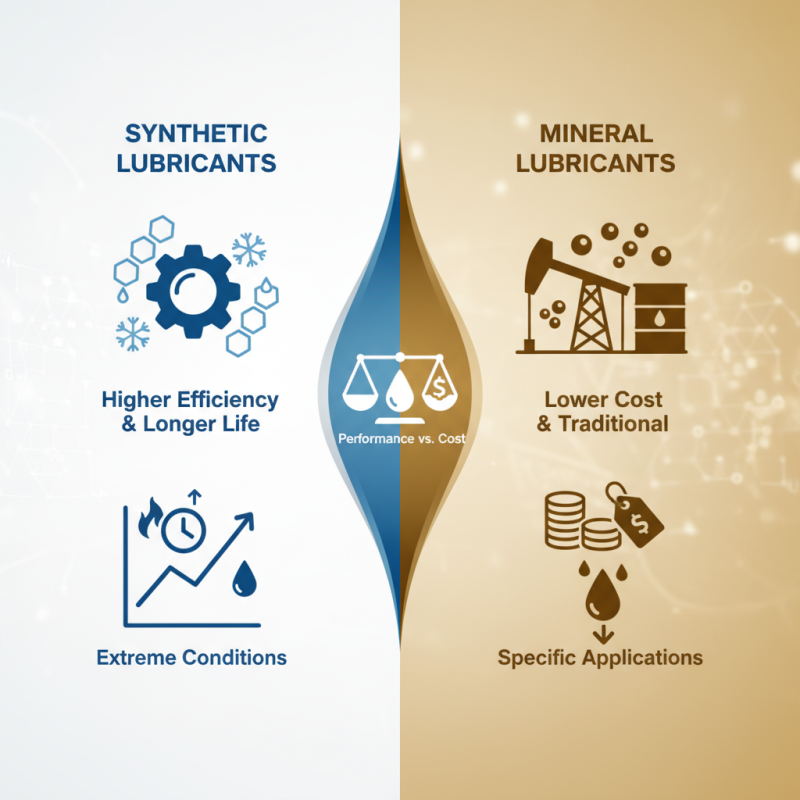
Synthetic lubricants are engineered fluids designed to provide optimal performance in various machinery applications. Unlike traditional mineral oils derived from refining crude oil, synthetic lubricants are synthesized using chemical processes. This results in uniform molecular structures that enhance their performance in extreme conditions. Their superior stability often leads to extended service life, reducing the need for frequent oil changes.
One key aspect of synthetic lubricants is their ability to withstand higher temperatures without breaking down. This quality is essential for high-performance engines and equipment operating in severe environments. Additionally, they often have better low-temperature properties. This ensures improved engine starts in cold weather. However, not all synthetic oils are the same. The manufacturing process and base stock can influence their performance characteristics.
Despite their advantages, synthetic lubricants are not without criticism. Some users find them more complex to choose from due to varying formulations. Misunderstanding these differences can lead to less effective lubrication. It's vital to consider the specific needs of your machinery and the operating conditions. Awareness and research into synthetic lubricants can lead to better decisions. The right choice hinges on understanding both the benefits and limitations of these products.
Mineral lubricants are derived from refined crude oil. They are a staple in many applications due to their widespread availability. These lubricants generally offer good performance in basic tasks, such as reducing friction and wear. However, they can be prone to breakdown at high temperatures.
Unlike synthetic lubricants, mineral oils can contain impurities. This can affect their effectiveness in highly demanding environments. Users may notice that mineral lubricants require more frequent changes. Their service life may not match that of their synthetic counterparts, especially under stress.
The properties of mineral lubricants can be variable. Factors such as the source of crude oil and the refining process play significant roles. This inconsistency can lead to challenges in maintaining optimal performance. While they can be an appropriate choice for simpler machinery, there are potential limitations. Users should always consider their specific needs before selecting a lubricant type.
Synthetic and mineral lubricants serve essential roles in machinery and automotive applications. The key differences lie in their composition and performance. Synthetic lubricants are engineered, offering superior heat resistance and lower volatility. They maintain viscosity across a broader temperature range. This means they perform well in extreme conditions, unlike mineral oils that can break down and evaporate.
Mineral lubricants, derived from refining crude oil, contain impurities. This can limit their effectiveness at high temperatures. They respond well in standard conditions but often fail under stress. Additionally, mineral oils can lead to sludge buildup, reducing engine performance.
When choosing between synthetic and mineral lubricants, understanding their advantages and disadvantages is crucial. Synthetic lubricants, engineered through chemical processes, offer superior performance at high and low temperatures. They resist oxidation and thermal breakdown. For instance, a study from the American Society of Mechanical Engineers (ASME) reports that synthetic oils can extend engine life by up to 50%. This attribute makes them a preferred choice in high-performance applications.
On the other hand, mineral lubricants, derived from refining crude oil, provide reliable performance at a lower cost. They contain natural additives that can improve engine cleanliness. However, they may break down more quickly than synthetics in extreme conditions. A recent industry report indicated that mineral oils generally have a shorter lifespan, requiring more frequent changes. This can lead to higher long-term costs despite their initial affordability.
Choosing the right lubricant also depends on environmental factors. Synthetic lubricants are often better at maintaining viscosity in varying temperatures. Yet, they can have a more significant ecological impact during production. Mineral oils, while more eco-friendly in some aspects, may not perform as efficiently in demanding scenarios. Understanding these nuances can help guide users toward informed, responsible choices.
When choosing between synthetic and mineral lubricants, understanding their applications is crucial. Synthetic lubricants excel in high-performance settings. They are engineered to withstand extreme temperatures. This makes them ideal for high-speed engines and machinery. They reduce friction effectively, enhancing overall efficiency. Synthetic oils can also last longer than their mineral counterparts.
On the other hand, mineral lubricants are derived from natural resources. They are often used in everyday vehicles and household appliances. While they perform adequately, their lifespan is shorter. There may be concerns over the environmental impact of mineral oils. Some applications may require additives to improve performance.
Each type has its pros and cons. Mineral lubricants may be more cost-effective for simple tasks. However, they may not provide the same level of protection for high-stress environments. Synthetic lubricants often justify their higher cost with better performance and longevity. Yet, some users might question their necessity in less demanding applications. Consider the specific needs before making a choice.
| Property | Synthetic Lubricants | Mineral Lubricants |
|---|---|---|
| Base Source | Chemically engineered from synthetic compounds | Derived from refined crude oil |
| Performance | Superior thermal stability and oxidation resistance | May degrade faster under high temperatures |
| Additives | Optimized for specific applications with tailored additives | Standard additives used, less tailored |
| Cost | Generally higher initial cost | Typically lower initial cost |
| Lifespan | Longer lifespan with less frequent changes | Shorter lifespan requiring more frequent changes |
| Environmental Stability | Better performance in extreme conditions | Less effective in extreme temperatures |
| Applications | High-performance engines, industrial machines | Standard vehicles, general machinery |
: Mineral lubricants are derived from refined crude oil. They reduce friction and wear.
Mineral lubricants can break down at high temperatures. This can affect their overall effectiveness.
Mineral oils can contain impurities from the refining process. These impurities may reduce performance in demanding environments.
Mineral lubricants generally require more frequent changes. Their service life is often shorter than synthetic oils.
Mineral lubricants are often used in everyday vehicles and appliances. They are suitable for simpler machinery.
Synthetic lubricants endure extreme temperatures and last longer. They enhance efficiency by reducing friction.
Mineral lubricants may be more cost-effective for basic tasks. However, synthetic oils often justify their cost with better performance.
The refining process influences the properties of mineral lubricants. Variability can challenge consistent performance.
Yes, there may be concerns regarding the environmental impact of mineral oils. Users should consider this factor.
Users should assess specific needs and application demands. Consider both performance and environmental factors in the decision.
The article titled "What is the Difference Between Synthetic and Mineral Lubricants?" explores the fundamental distinctions between these two types of lubricants. Synthetic lubricants are man-made fluids engineered for specific properties, offering superior performance in extreme conditions, while mineral lubricants, derived from refining crude oil, provide a more traditional, cost-effective solution.
Key differences highlighted in the article include their formulation, performance characteristics, and environmental impact. While synthetic lubricants often excel in high-temperature scenarios and provide better protection against wear and tear, mineral lubricants may be preferred for their lower cost and availability. Each type has its own advantages and disadvantages, making them suitable for different applications in automotive, industrial, and machinery operations. Understanding these factors can help users make informed decisions when selecting the right lubricant for their needs.

SHE Auto